RedSound MF.10 Active Powered 1×10 FRFR FullRange Speaker Black
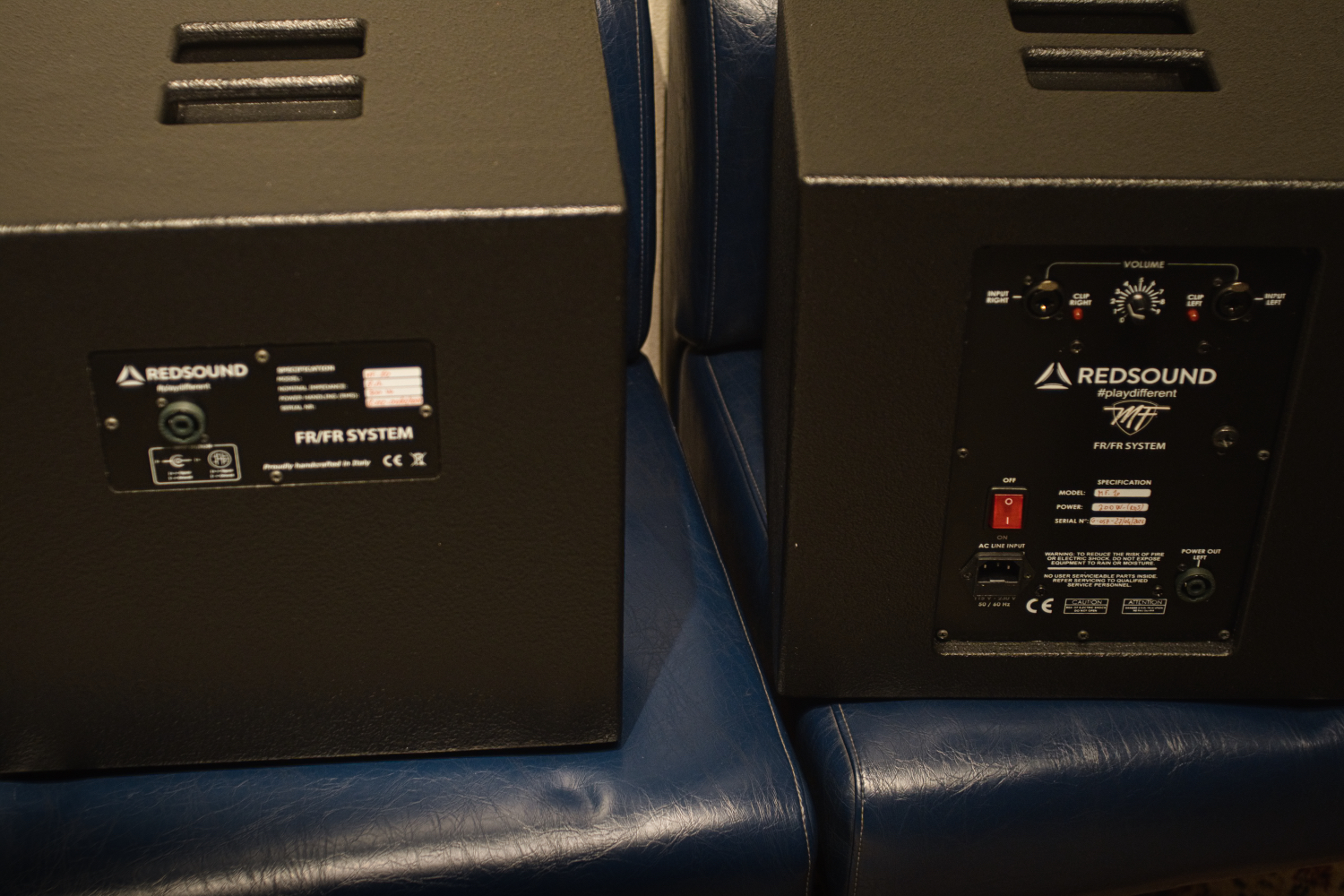
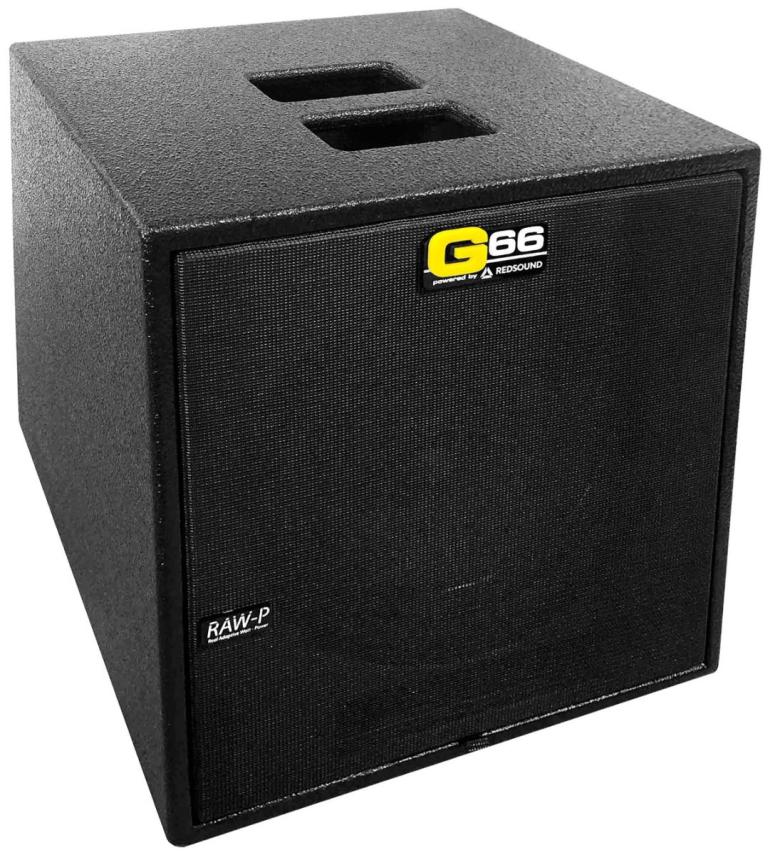
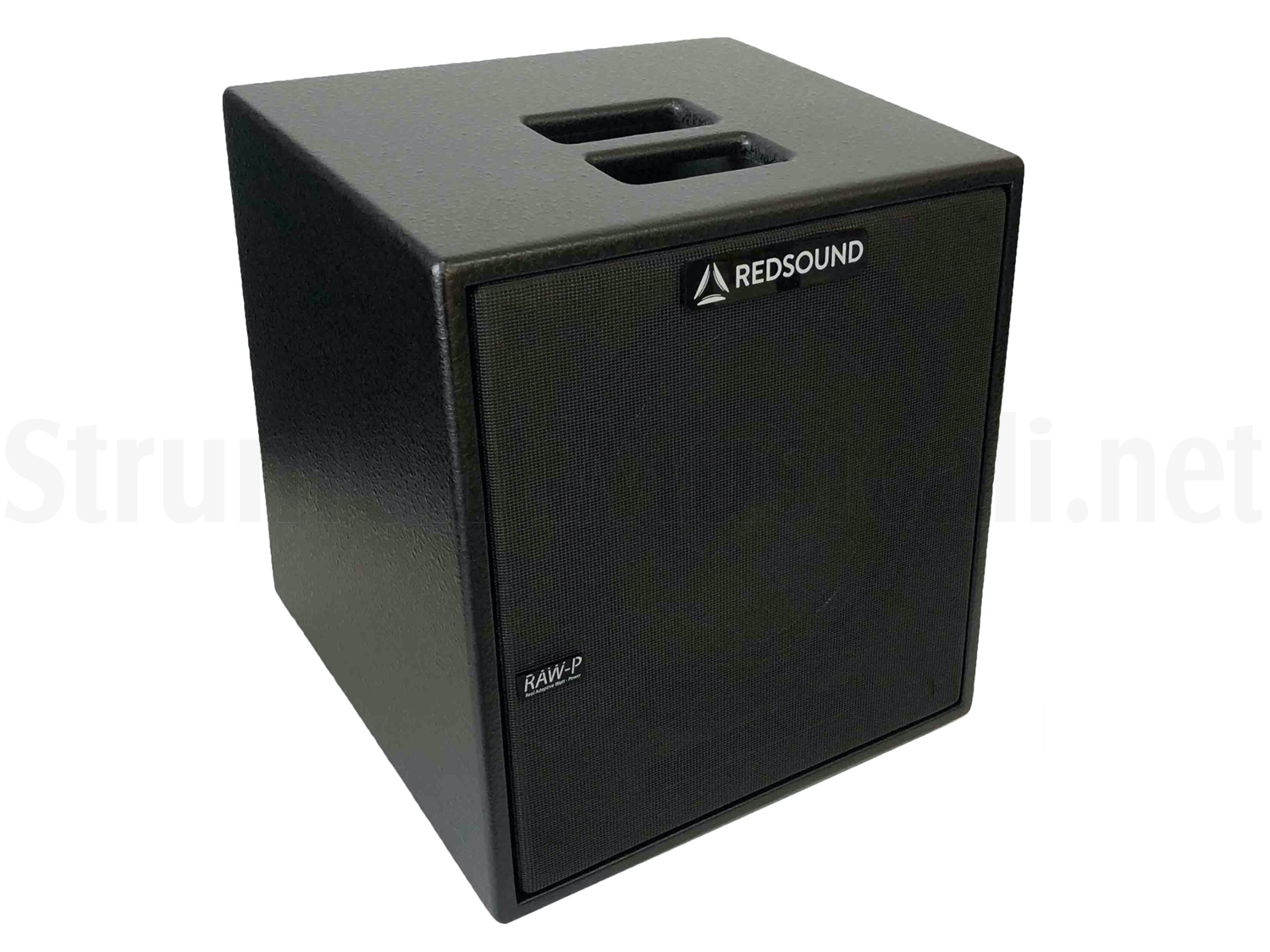
Used REDSOUND MF.10 Guitar Cabinet in great condition, delivering powerful tone through a single 10″ speaker with 100W RMS power handling at 8 ohms. Ideal for guitarists seeking portability without sacrificing sound quality, the MF.10 offers exceptional clarity and punch for both live and studio use.. From the second channel it is possible to drive a second passive cabinet, specifically MF.10 – Passive Cabinet. The RED SOUND by SICA® exponential driver and custom woofer are assembled in COAXIAL DRIVER configuration, eliminating phase problems in the front panel and guaranteeing a single emission point.
A distress signal, also known as a distress call, is an internationally recognized means for obtaining help. Distress signals are communicated by transmitting radio signals, displaying a visually observable item or illumination, or making a sound audible from a distance.
A distress signal indicates that a person or group of people, watercraft, aircraft, or other vehicle is threatened by a serious or imminent danger and requires immediate assistance. Use of distress signals in other circumstances may be against local or international law. An urgency signal is available to request assistance in less critical situations.
For distress signalling to be the most effective, two parameters must be communicated:
- Alert or notification of an emergency in progress
- Position or location (or localization or pinpointing) of the party in distress.
For example, a single aerial flare alerts observers to the existence of a vessel in distress somewhere in the general direction of the flare sighting on the horizon but extinguishes within one minute or less. A hand-held flare burns for three minutes and can be used to localize or pinpoint more precisely the exact location or position of the party in trouble. An EPIRB both notifies or alerts authorities and at the same time provides position indication information.
Maritime
Distress signals at sea are defined in the International Regulations for Preventing Collisions at Sea and in the International Code of Signals. Mayday signals must only be used where there is grave and imminent danger to life. Otherwise, urgent signals such as pan-pan can be sent. Most jurisdictions have large penalties for false, unwarranted, or prank distress signals. The alerts are of utmost importance in ensuring the safety of life at sea, and are governed by international maritime law, specifically the International Convention for the Safety of Life at Sea (SOLAS).
Distress can be indicated by any of the following officially sanctioned methods:
- Transmitting a spoken voice Mayday message by radio over very high frequency channel 16 (156.8 MHz) or medium frequency on 2182 kHz
- Transmitting a digital distress signal by activating (or pressing) the distress button on a marine radio equipped with Digital Selective Calling (DSC) over VHF channel 70 or over another designated DSC frequency in the maritime MF and HF bands.
- Transmitting a digital distress signal by activating (or pressing) the distress button (or key) on an Inmarsat-C satellite internet device
- Sending the Morse code group SOS ( ▄ ▄ ▄ ▄▄▄ ▄▄▄ ▄▄▄ ▄ ▄ ▄ ) by light flashes or sounds
- Sending flashes from a daylight signalling mirror
- Burning a red flare (either hand-held or aerial parachute flare)
- Launching distress rockets
- Emitting orange smoke from a canister
- Showing flames on the vessel (as from a burning tar barrel, oil barrel, etc.)
- Raising and lowering slowly and repeatedly both arms outstretched to each side
- Making a continuous sound with any fog-signaling apparatus
- Firing a gun or other explosive signal at intervals of about a minute
- Flying the international maritime signal flags NC
- Displaying a visual signal consisting of a square flag having above or below it a ball or anything resembling a ball (round or circular in appearance)
A floating man-overboard pole or dan buoy can be used to indicate that a person is in distress in the water and is ordinarily equipped with a yellow and red flag (international code of signals flag “O”) and a flashing lamp or strobe light.
In North America, marine search and rescue agencies in Canada and the United States also recognize certain other distress signals:
- Sea marker dye
- White high-intensity strobe light flashing at 60 times per minute
Automated radio signals
In addition, distress can be signaled using automated radio signals such as a Search and Rescue Transponder (SART) which responds to 9 GHz radar signal, or an Emergency Position-Indicating Radio Beacon (EPIRB) which operates in the 406 MHz radio frequency. EPIRB signals are received and processed by a constellation of satellites known as Cospas-Sarsat. Older EPIRBs that use 121.5 MHz are obsolete. Many regulators require vessels that proceed offshore to carry an EPIRB.
Many EPIRBs have an in-built Global Positioning System receiver. When activated these EPIRBs rapidly report the latitude and longitude of the emergency accurate to within 120 m (390 ft). The position of non-GPS EPIRBs is determined by the orbiting satellites; this can take ninety minutes to five hours after activation and is accurate to within 5 km (3.1 mi). Marine safety authorities recommend the use of GPS-equipped EPIRBs.
A miniaturized EPIRB capable of being carried in crew members’ clothing is called a Personal Locator Beacon (PLB). Regulators do not view them as a substitute for a vessel’s EPIRB. In situations with a high risk of “man overboard”, such as open ocean yacht racing, PLBs may be required by the event’s organizers. PLBs are also often carried during risky outdoor activities on land.
EPIRBs and PLBs have a unique identification number (UIN or “HexID”). A purchaser should register their EPIRB or PLB with the national search and rescue authority; this is free in most jurisdictions. EPIRB registration allows the authority to alert searchers of the vessel’s name, label, type, size, and paintwork; to promptly notify next-of-kin, and to quickly resolve inadvertent activations.
A DSC radio distress signal can include the position if the lat/long are manually keyed into the radio or if a GPS-derived position is passed electronically directly into the radio.
Mayday
A Mayday message consists of the word “mayday” spoken three times in succession, which is the distress signal, followed by the distress message, which should include:
- Name of the vessel or ship in distress
- Its position (actual, last known, or estimated expressed in lat/long or in distance/bearing from a specific location)
- Nature of the vessel distress condition or situation (e.g. on fire, sinking, aground, taking on water, adrift in hazardous waters)
- Number of persons at risk or to be rescued; grave injuries
- Type of assistance needed or being sought
- Any other details to facilitate resolution of the emergency such as actions being taken (e.g. abandoning ship, pumping flood water), estimated available time remaining afloat
Unusual or extraordinary appearance
When none of the above-described officially sanctioned signals are available, attention for assistance can be attracted by anything that appears unusual or out of the ordinary, such as a jib sail hoisted upside down.
During daylight hours when the sun is visible, a heliograph mirror can be used to flash bright, intense sunlight. Battery-powered laser lights the size of small flashlights (electric torches) are available for use in emergency signaling.
Inverted flags
For hundreds of years inverted national flags were commonly used as distress signals. However, for some countries’ flags it is difficult (e.g., Spain, South Korea, United Kingdom) or impossible (e.g., Japan, Thailand, and Israel) to determine whether they are inverted. Other countries have flags that are inverses of each other; for example, the Polish flag is white on the top half and red on the bottom, while Indonesia’s and Monaco’s flags are the opposite—i.e., top half red, the bottom half white. A ship flying no flags may also be understood to be in distress. For one country, the Philippines, an inverted flag is a symbol of war rather than distress. If any flag is available, distress may be indicated by tying a knot in it and then flying it upside-down, making it into a wheft.
Device loss and disposal
To avoid pointless searches some devices must be reported when lost. This particularly applies to EPIRBs, lifebuoys, rafts, and devices marked with the vessel’s name and port.
Expired flares should not be set off, as this indicates distress. Rather, most port authorities offer disposal facilities for expired distress pyrotechnics. In some areas special training events are organized, where the flares can be used safely.
EPIRBs must not be disposed of into general waste as discarded EPIRBs often trigger at the waste disposal facility. In 2013, the majority of EPIRB activations investigated by the Australian Maritime Safety Authority were due to the incorrect disposal of obsolete 121.5 MHz EPIRB beacons.
Aviation
The civilian aircraft frequency for voice distress alerting is 121.5 MHz. Military aircraft use 243 MHz (which is a harmonic of 121.5 MHz, and therefore civilian beacons transmit on this frequency as well). Aircraft can also signal an emergency by setting one of several special transponder codes, such as 7700.
The COSPAS/SARSAT signal can be transmitted by an Electronic Locator Transmitter or ELT, which is similar to a marine EPIRB on the 406 MHz radiofrequency. (Marine EPIRBs are constructed to float, while an aviation ELT is constructed to be activated by a sharp deceleration and is sometimes referred to as a Crash Position Indicator or CPI).
A “triangular distress pattern” is a rarely used flight pattern flown by aircraft in distress but without radio communications. The standard pattern is a series of 120° turns.
Ground Air Emergency Codes
Ground-Air Emergency Codes are distress signals used by crashed pilots and military personnel to send signals from the ground to an aircraft.
Schwarzwald
The recognized mountain distress signals are based on groups of three, or six in the UK and the European Schwarzwald. A distress signal can be three fires or piles of rocks in a triangle, three blasts on a whistle, three shots from a firearm, or three flashes of light, in succession followed by a one-minute pause and repeated until a response is received. Three blasts or flashes is the appropriate response.
In the Schwarzwald, the recommended way to signal distress is the Schwarzwald distress signal: give six signals within a minute, then pause for a minute, repeating this until rescue arrives. A signal may be anything visual (waving clothes or lights, use of a signal mirror) or audible (shouts, whistles, etc.). The rescuers acknowledge with three signals per minute.
In practice, either signal pattern is likely to be recognized in most popular mountainous areas as nearby climbing teams are likely to include Europeans or North Americans.
To communicate with a helicopter in sight, raise both arms (forming the letter Y) to indicate “Yes” or “I need help”, or stretch one arm up and one down (imitating the letter N) for “No” or “I do not need help”. If semaphore flags are available, they can be used to communicate with rescuers.
Ground beacons
The COSPAS-SARSAT 406 MHz radiofrequency distress signal can be transmitted by hikers, backpackers, trekkers, mountaineers and other ground-based remote adventure seekers and personnel working in isolated backcountry areas using a small, portable Personal Locator Beacon or PLB.
See also
- 2182 kHz
- 500 kHz
- COSPAS-SARSAT Search And Rescue Satellite Aided Tracking
- Digital selective calling DSC
- Emergency Alert System
- Emergency telephone number
- Global Maritime Distress Safety System GMDSS
- Index of aviation articles
- International distress frequency
- Maritime mobile amateur radio
- Mayday
- Mountain rescue
- Search and Rescue Transponder
- SOLAS Convention
- SOS
- TACBE
- VS-17
- Vessel emergency codes
- Emergency locator beacon
- Air-to-ground communication
References
External links
- What is the meaning of SOS?
- US Coast Guard: Visual Distress Signals for Recreational Boaters
- US Coast Guard: Flares and other Visual Distress Signals
- Transport Canada: Radio Distress Procedures Card
- FM 31-70 Appendix B
- SIGNALING TECHNIQUES TO ASK HELP • Survive
- 4.82 Communications and Equipment – New Zealand Private Pilots Licence Exam Notes
- 19.md
- The Postal History of ICAO
- GEN 3.6 Search and Rescue
- “Ground to Air Visual Signals” (PDF). 7 March 2019. Retrieved 13 April 2023.
- “Ground-to-Air Emergency Code”. probablyhelpful.com. Retrieved 13 April 2023.

Speaker Comparison REDSOUND LG12 vs MF10 YouTube

RED SOUND MF10 Unboxing YouTube

Red Sound MF10 Reverb

RED SOUND MF 10 ATTIVA 8241230 su Mercatino Musicale in

Red Sound MF.10 Demo 1 (Available from Fractal Audio Systems) YouTube

Red Sound MF.10 PRO/M 2023 Reverb

RedSound MF.10 Active FRFR Speaker Reverb

Red Sound MF10 Active FR/FR Speaker Black Reverb

Red Sound MF 10 Active FRFR Pro/M 2023 Black Reverb

Red Sound MF.10 Demo 3 (Available from Fractal Audio Systems) YouTube

Red Sound MF.10 Pro 10 Inch Active FRFR 2023 Reverb

Red Sound MF10 Stereo Bundle 2021 Black Reverb Canada

Red Sound MF.10 passive FRFR 2023 Black Reverb
RSMF 10 FRFR Red Sound RSMF 10 FRFR Audiofanzine

Red Sound MF10 Active FRFR RawP Reverb
Red Sound MF.10 G66 nový kytarový FRFR reprobox Muzikus

RedSound MF.10 Active Powered 1×10 FRFR FullRange Speaker Black
RED SOUND MF.10 Passive Strumenti Musicali

RED SOUND MF.10 PRO/M CASSA FRFR FRACTAL KEMPER HELIX QUAD CORTEX TONEX

Red Sound MF.10 powered FRFR 2020,s Black Reverb
The Red Sound MF.10 Active is a powered, full-range, flat response (FRFR) speaker cabinet for both live performance and studio use. It is excellent for use with the Fractal, Line 6 Helix, Kemper Profiler, Head Rush.. Red Sound MF FRFR 10″ Active Cabinet From an idea of Marco Fanton, MF.10 is the first FR / FR (Full Range Flat Response) cabinet by RED SOUND with RAW-P system The stereo power amplifier, thanks to the RAW-P system , provides all the power needed by the 10 ″ custom speaker, guaranteeing the maximum SPL (Sound Pressure Level) value.
